
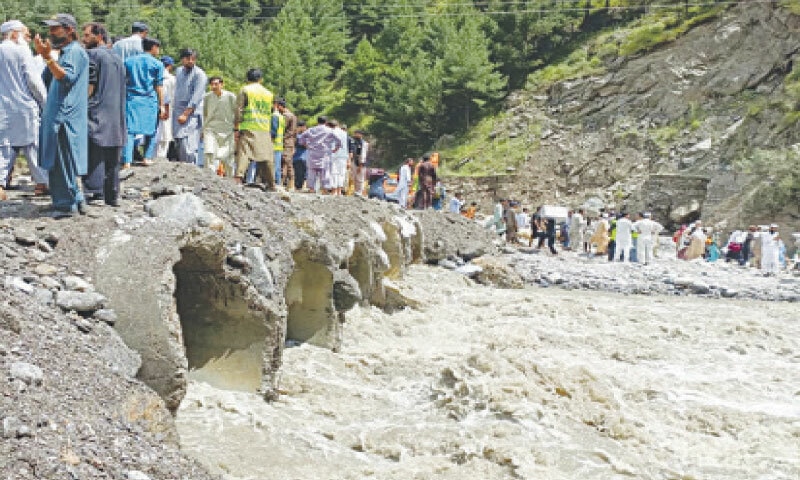
ISLAMABAD: A $9.8 million flood resilience initiative has been approved by the Green Climate Fund (GCF) to bolster climate risk management in Khyber-Pakhtunkhwa’s flood-prone regions.
As reported, the Green Climate Fund (GCF) approved a $9.8 million climate risk management initiative aimed at strengthening resilience to extreme weather events in flood-prone districts of Khyber-Pakhtunkhwa to be implemented by the World Food Programme (WFP) of the United Nations in collaboration with the government.
The five-year project, executed by the World Food Programme (WFP) in partnership with the Pakistani government, aims to enhance flood forecasting, early warning systems, and community resilience.
It will benefit over 1.6 million vulnerable individuals, with a focus on marginalized groups, by improving local adaptation plans and supporting livelihood diversification.
The approval of the project was granted during a meeting of the GCF board held in Songdo-Incheon (South Korea), where the agreement was also signed between WFP and GCF.
On July 2, the Provincial Disaster Management Authority declared 11 district of Khyber Pakhtunkhwa as the ‘most vulnerable’ to floods in its Monsoon Contingency Plan 2024 unveiled on Monday.
The 11 districts declared as prone to high floods include Upper and Lower Chitral, Swat, Dera Ismail Khan, Charsadda, Nowshera, Shangla, Upper and Lower Dir, Tank and Peshawar.
The PMDA plan aimed at minimising disaster risks and facilitating a coordinated and timely response, according to a statement issued here.
Additionally, 14 other districts, including Malakand, Torghar, Lower and Upper Kohistan, Kolai Palas, North Waziristan, Mardan, Abbottabad, Karak, Buner, South Wazirstan, Lakki Marwat, Swabi, and Mohmand are classified as medium to flood risk during the season.