
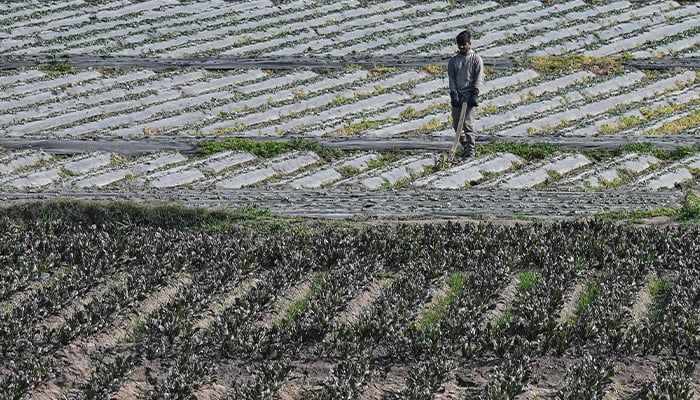
Sever drought conditions are threatening Pakistan’s winter harvest. The situation is particularly dire in regions such as Balochistan and Sindh, where rainfall over the past three months has been significantly below normal, adversely affecting winter crops like wheat, which are crucial for food security.
Farmers facing a severe drought that threatens their winter harvest, consider abandoning agriculture for alternative employment.
The lack of precipitation has delayed seed germination and disrupted crop development, raising concerns about meeting agricultural production targets for the winter season. Experts warn that not only will rabi crops suffer, but there will also be insufficient water for kharif crops in the upcoming summer season.
According to Pakistan Meteorological Department (PMD), the farming heartland of eastern Punjab province saw 42% less rainfall than normal between the start of September and mid-January.
Sindh witnessed rainfall 52% below normal levels according to the PMD, while Balochistan in the west saw a 45% drop.
A “mild drought” affected much of Punjab, all of Sindh, and nearly half of Balochistan in January, according to the PMD, which anticipates rapidly developing “flash droughts” during the warmer months ahead.
“The lack of rains has had a major financial impact on farmers, whether they have a big holding or a small one,” Fruit and Vegetable Exporters Association Punjab chairman Malik Asghar told AFP.
“Potato is a staple in my area. The average is very low this year. Usually we could easily get 100 to 120 sacks per acre. This winter we have only gotten about 60 sacks per acre,” he added.
According to him, many small farmers “were already giving up” and looking for employment elsewhere.
“This spell of dry weather will have a very adverse reaction on them,” he added.