
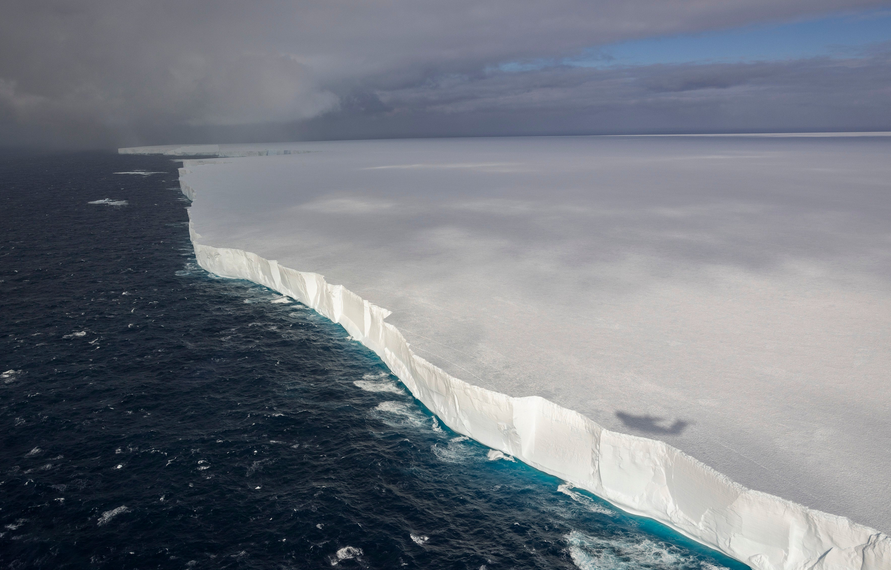
The world’s largest iceberg, known as A23a, is currently drifting towards South Georgia after decades of being grounded on the ocean floor. This massive iceberg, which is approximately twice the size of Greater London and weighs over one trillion tonnes, broke free from its position north of the South Orkney Islands in December 2024. It has since been moving northward in the Southern Ocean, now about 173 miles away from South Georgia.
Researchers are concerned that if A23a collides with South Georgia, it could severely disrupt local wildlife. The iceberg could block access to feeding areas for seals and penguins, potentially leading to significant fatalities among these species. Historical precedents exist; for instance, in 2004, another iceberg (A38) blocked feeding routes for wildlife in the region.
As A23a continues its journey, it is experiencing erosion due to warmer waters, which may cause it to break into smaller chunks as it approaches South Georgia. These smaller icebergs could pose navigational hazards for ships and fishermen in the area.
The iceberg is currently moving at a rate of about 30 miles per day and is expected to enter “iceberg alley,” a route commonly taken by drifting icebergs.
The movement of A23a highlights broader concerns regarding climate change and its effects on polar ice. As ocean temperatures rise, large icebergs like A23a are becoming more common due to increased calving from ice shelves.
Scientists are closely monitoring this situation not only for its immediate ecological impacts but also for what it signifies about ongoing changes in the Earth’s climate systems.
A23a’s drift towards South Georgia poses significant risks to local wildlife and navigation while serving as a stark reminder of the impacts of climate change on polar regions.