
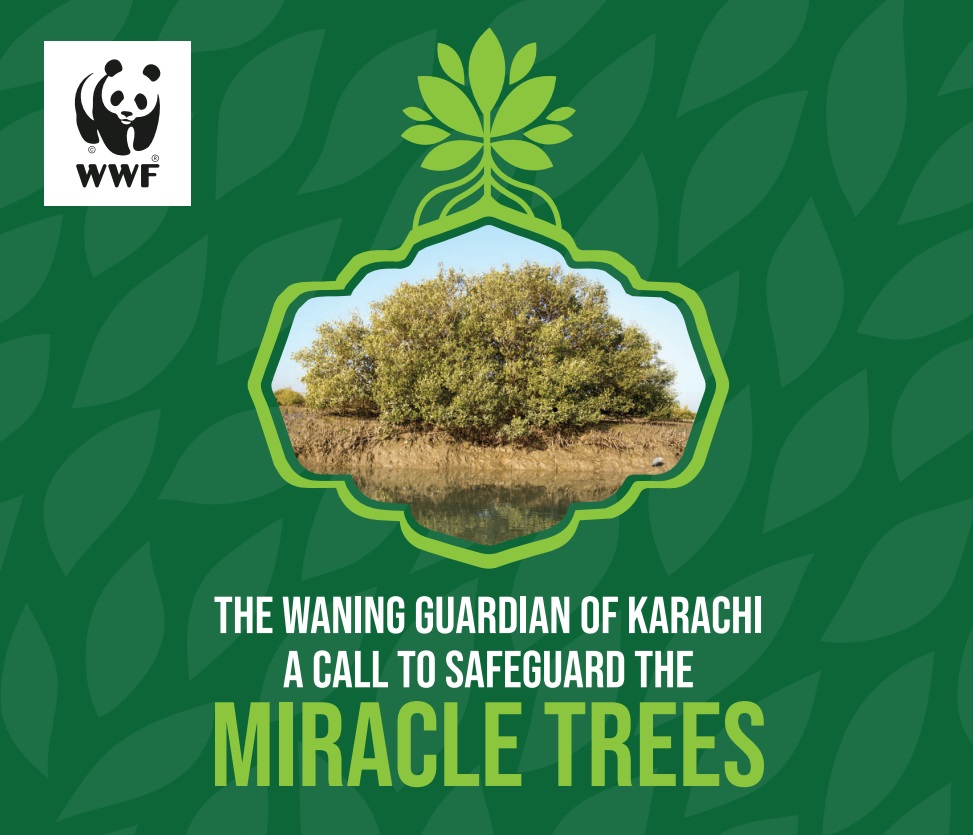
KARACHI: A latest report by World Wide Fund for Nature (WWF) Pakistan has highlighted the alarming destruction of mangrove forests along Karachi’s coastline in Sindh province, using satellite-based evidence to identify areas where mangroves have been destroyed or are under threat.
Despite efforts by the Sindh Forest Department to preserve and enhance mangrove cover, unauthorized activities such as land reclamation, illegal logging, and pollution continue to threaten these vital ecosystems.
Satellite images reveal widespread clearance of mangroves for residential, commercial, and industrial development projects, including the destruction of mangroves for residential projects near Younusabad, Kakapir Village, Haji Ali Goth, Mauripur, Shamshir Island Keamari, Machar Colony, Bhutta Village, and the Port Tower Complex along the Mai Kolachi bypass. Additionally, mangrove forests have been converted for commercial and recreational purposes in DHA Phase 8 and along Airmen Golf Club and Recreational Park, Karachi. Furthermore, mangroves have been cleared for industrial development near the Korangi Creek Industrial Park and along the coast near Port Qasim.
The report, titled “The Waning Guardian of Karachi: A Call to Safeguard The Miracle Trees”, emphasizes the importance of mangroves in protecting against cyclones and climate-induced disasters, carbon sequestration, and breeding nurseries for marine and terrestrial species.
WWF-Pakistan’s geospatial experts used Earth Observation Satellites, Remote Sensing, and GIS tools to identify areas where mangrove landscapes are still under threat of deforestation, highlighting the need for urgent action to prevent further destruction.
The destruction of mangrove forests along Karachi’s coastline not only threatens the environment but also the city’s resilience against climate change. As the city expands due to increasing urbanization, mangrove areas are being cleared to make way for development projects, overlooking the long-term cost of environmental consequences.
Mangroves play a vital role in mitigating climate change by sequestering carbon in their biomass and sediments, helping combat global warming. Recent studies have found that mangroves and coastal wetlands sequester carbon annually at a rate ten times greater than mature tropical forests.
The report urges stakeholders to work together to stop mangrove destruction along Karachi’s coastline. By implementing strict enforcement of laws, encouraging reforestation and natural regeneration programs, and continuous monitoring and research, we can successfully restore and preserve these important natural resources for future generations.