
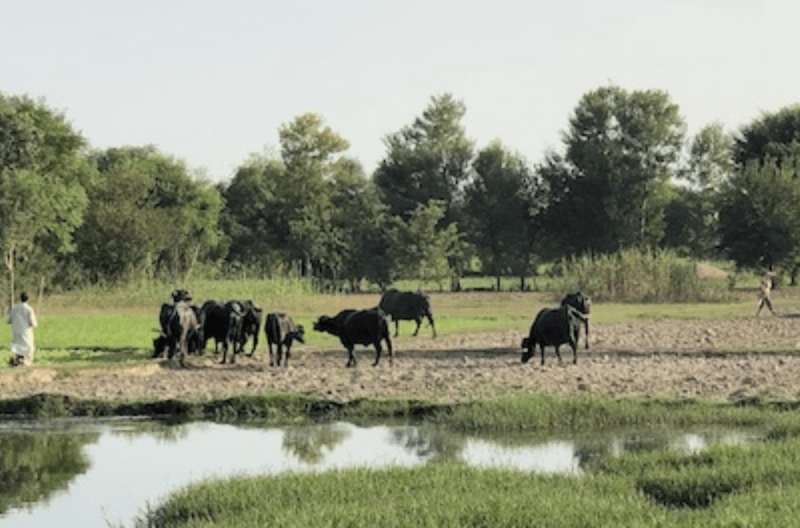
Small farmers across Pakistan are increasingly feeling the devastating effects of climate change, with the recent heatwaves in Karachi causing significant livestock losses.
As reported, over 15,000 cattle have died due to extreme heat, highlighting the government’s failure to provide adequate support and resources.
The communication gap between federal and provincial authorities has left farmers to fend for themselves, exacerbating the crisis.
Despite recommendations for climate-resilient measures, weak governance continues to hamper effective climate action.
According to Shakir Umar Gujjar, president of the Cattle and Dairy Farmers Association, Pakistan, up to 15,000 cattle died due to scorching heat mixed with high humidity in the port city. He said which was “no joke”.
Meanwhile, Mubashir Abbas, owner of 170 heads, lost eight cows and five buffaloes to the “extreme heat” in the last week of June, which translates to a loss of Rs5.5 million (USD 19,800) for him.
“Three more are running high fever and I will have to sell them to cut my losses,” he told IPS over the phone from Bhains Colony, in Karachi’s Landhi district.
“I will fetch no more than Rs40,000 (USD 143) a piece when the market rate for each healthy one is valued between Rs1.5 and 2 million (USD 5,300-7,000),” he said.
“From June 23 to 30, Karachi experienced a heatwave with temperatures ranging between 40 and 42°C. The ‘feel-like’ temperature went up to 54°C due to high humidity,” said the chief meteorologist at the Pakistan Meteorological Department Dr Sardar Sarfaraz.
Dr Nazeer Hussain Kalhoro, director general at the government’s Sindh Institute of Animal Health in the Livestock and Fisheries Department in Karachi, has attributed extreme heat to the death of livestock, especially exotic and crossed breeds.