
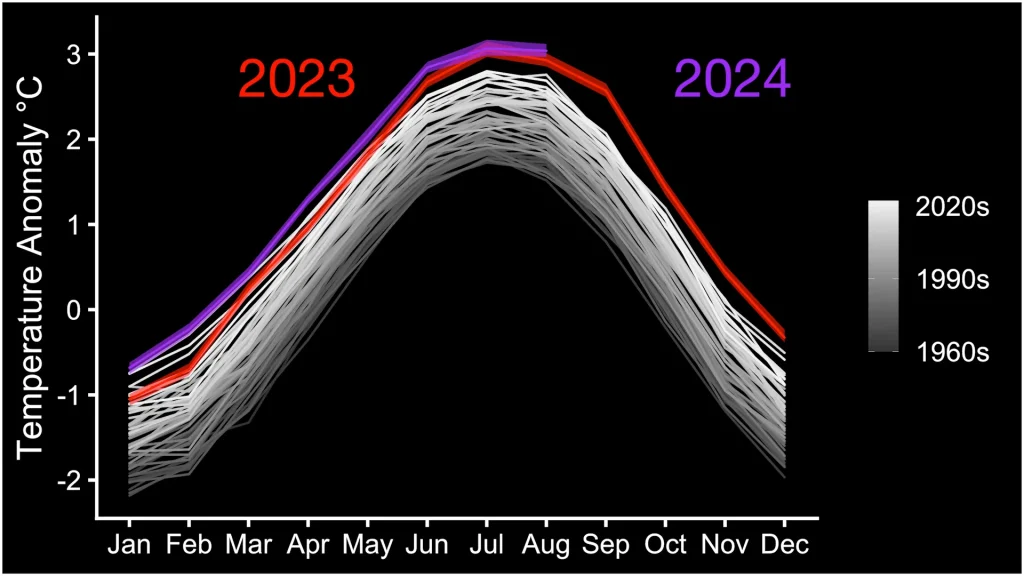
NASA’s recent findings highlight a year marked by unprecedented climate extremes, culminating in August 2024, which has been declared the hottest month on record. This month capped off the hottest summer globally since temperature records began in 1880, with significant implications for climate change.
Key Highlights
Record Temperatures: August 2024 set a new monthly temperature record, with global average temperatures 2.34°F (1.3°C) above the historical baseline for August. The combined summer months of June, July, and August were 0.2°F (0.1°C) warmer than any previous summer recorded by NASA, surpassing the previous high set in 2023.
Long-term Trends: The summer of 2024 was approximately 2.25°F (1.25°C) warmer than the average summer from 1951 to 1980. This trend continues a worrying pattern of rising temperatures, with scientists noting that the past two years have seen record-breaking heat levels that exceed those during strong El Niño years.
Global Context: The Copernicus Climate Change Service corroborated NASA’s findings, indicating that August 2024 was tied with August 2023 as the warmest on record globally, with an average surface air temperature of 16.82°C—0.71°C above the average for the period of 1991-2020. This marks the 15th consecutive month of record-high global temperatures, emphasizing a sustained period of extreme heat.
Implications of Climate Change: Gavin Schmidt, director of NASA’s Goddard Institute for Space Studies, emphasized that this data reflects ongoing human-driven climate change. The increasing frequency and intensity of heat records serve as a stark reminder of the urgent need for action against global warming.
Future Projections: With global temperatures continuing to rise and records being broken almost yearly, scientists stress the importance of addressing climate change proactively. The ongoing trend suggests that 2024 may continue to challenge previous records as it progresses.
The data from NASA and other climate agencies underline a critical moment in our understanding of climate change, showcasing not only the immediate impacts but also the long-term trajectory of Earth’s warming climate.