
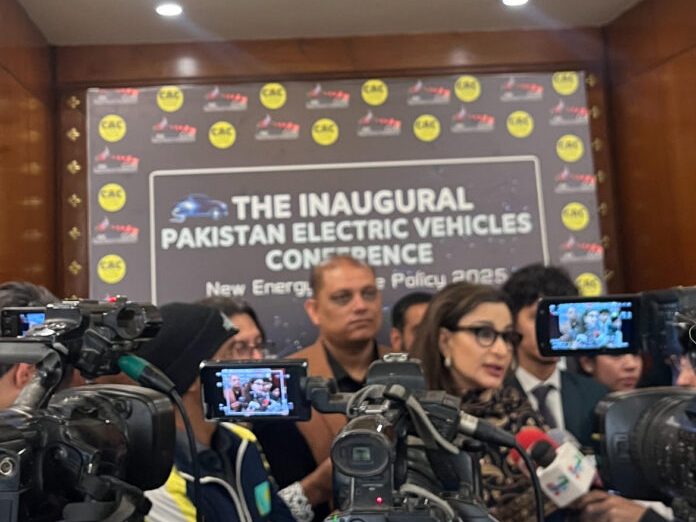
Senator Sherry Rehman, chairperson of the Standing Committee on Climate Change, highlighted the significant impact of the transport sector on Pakistan’s carbon emissions during the inaugural Pakistan Electric Vehicle (EV) Conference held in Karachi on Dec 21.
She stated that this sector is responsible for 31% of the country’s total carbon emissions, equating to 52.9 million tonnes of CO2 annually.
At the conference, themed “Accelerating the Transition to a Sustainable Future,” Rehman emphasized that transitioning to electric vehicles could reduce tailpipe emissions by 65%, as outlined in the New Energy Vehicle Policy. She underscored the importance of EVs in achieving Pakistan’s climate goals under the Paris Agreement.
Rehman pointed out the alarming air quality crisis in Pakistan, which ranks as the second-most polluted country globally. Lahore, with a population of 14 million, often experiences smog with Air Quality Index (AQI) readings exceeding 1,000, significantly impacting public health and reducing life expectancy by up to 4.6 years.
The economic toll of air pollution is estimated at $47 billion annually, accounting for nearly 5.88% of GDP.
She further noted that air pollution affects approximately 11 million children under five in Punjab, exposing them to severe respiratory diseases. With transport contributing to 43% of airborne emissions in Punjab, she argued that adopting EVs is not just beneficial but essential for public health and environmental sustainability.
Rehman called for supportive policies to encourage both the import and local manufacturing of EVs, aiming to create a sustainable ecosystem for their maintenance and cost-effective use. She acknowledged recent advancements, such as Karachi’s first electric bus service and plans for additional electric buses, as pivotal steps towards modernizing public transport.
According to Pakistan’s New Energy Vehicle Policy 2025-2030, the country aims for 30% of new vehicle sales to be electric by 2030, escalating to 90% by 2040 and 100% by 2060. This phased approach is crucial for developing necessary infrastructure and supporting large-scale EV adoptio.