
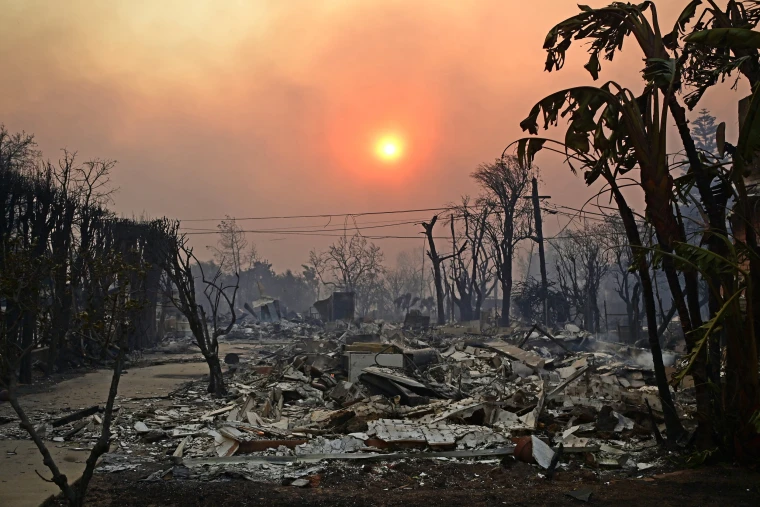
Southern California is experiencing an exceptional firestorm without historical precedent, driven by a combination of severe drought and near-hurricane strength winds. This situation is indicative of an emerging era of compound weather events, where multiple extreme conditions occur simultaneously, overwhelming response capabilities.
On January 9, President Joe Biden pledged assistance from the Department of Defense to bolster state and local firefighting efforts, highlighting the significant strain these fast-moving fires have placed on resources.
As of January 9, the Palisades and Eaton fires have burned over 10,000 acres each and remain uncontained. The Palisades fire has become the most destructive in Los Angeles history, with hundreds of homes destroyed and municipal water supplies depleted. Approximately 130,000 residents have been evacuated, and many areas have experienced deliberate power outages to mitigate fire risks from downed lines.
The rapid spread of the fires has led to chaotic evacuations, with residents abandoning vehicles in gridlocked areas. At least five fatalities have been reported, alongside significant property loss across various communities.
The current wildfires are exacerbated by extremely dry conditions and strong Santa Ana winds, which can reach gusts of up to 100 mph. These winds contribute to low humidity levels, making vegetation highly susceptible to ignition. Notably, Southern California has faced an unusually dry winter, with minimal rainfall since early May 2024.
Experts warn that climate change is increasing the frequency and intensity of such wildfires. The region’s vegetation has become more vulnerable due to rapid shifts between wet and dry conditions over recent years, creating a tinderbox environment ready for ignition.