
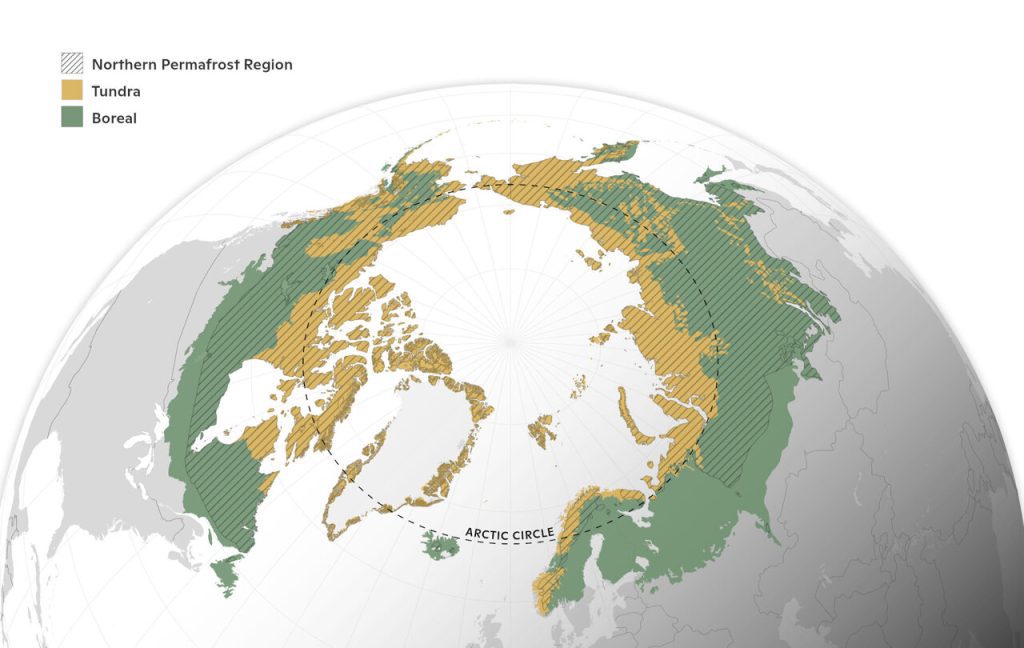
A recent study has revealed alarming changes in the Arctic, where over 30% of its tundra, forests, and wetlands have transitioned from being a carbon sink to a source of carbon emissions. This transformation is largely attributed to global warming, which is disrupting thousands of years of carbon storage in the region’s permafrost.
The analysis indicates that more than 30% of Arctic ecosystems are now net sources of carbon dioxide (CO2), a figure that rises to 40% when accounting for emissions from wildfires.
For millennia, the Arctic has acted as a natural reservoir for carbon, with permafrost effectively trapping vast amounts of organic carbon. However, rising temperatures are causing this permafrost to thaw, leading to increased decomposition of organic materials and subsequent CO2 emissions.
The study utilized data from 200 monitoring sites spanning from 1990 to 2020, highlighting how rapid warming is transforming the region’s boreal forests, wetlands, and tundra ecosystems.
The warming Arctic is creating a positive feedback loop where increased greenhouse gas emissions contribute to further climate change. As temperatures rise, more carbon is released from thawing permafrost, exacerbating global warming.
“For millennia, Arctic land ecosystems have acted as a deep-freeze for the planet’s carbon, holding vast amounts of potential emissions in the permafrost. But ecosystems in the region are increasingly becoming a contributor to global heating as they release more CO2 into the atmosphere with rising temperatures,” a new study published in Nature Climate Change concluded.
“It is the first time that we’re seeing this shift at such a large scale, cumulatively across all of the tundra. That’s a pretty big deal,” said Sue Natali, a co-author and lead researcher on the study at the Woodwell Climate Research Center.