
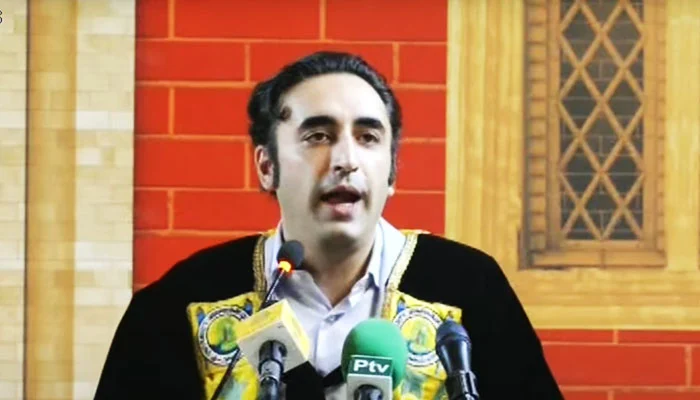
Pakistan People’s Party (PPP) Chairman Bilawal Bhutto-Zardari has stated that climate change is the biggest issue facing the world today, posing a significant threat to future generations, perhaps greater than ever before. He highlighted recent floods as a clear example of this crisis.
While addressing the convocation at Sindh University Jamshoro, Bilawal on Monday, December 23, Bilawal emphasized that previous generations did not comprehend the challenges posed by climate change as they should have.
He warned that if the glaciers in our mountains melt, future generations will continuously face historic floods. He noted that the Himalayas, which have supplied water to the Indus River for centuries, are at risk of melting, presenting a major threat to Pakistan, which is unprepared to confront and understand this danger.
Bilawal urged students and their peers to prepare for action against climate change on a war footing, stating that efforts must extend from Gilgit-Baltistan to the last stretch of the Indus River. He criticized older policymakers involved in the Public Sector Development Program (PSDP), questioning whether they are considering the long-term future or merely focusing on immediate budget figures.
He called for comprehensive infrastructure development concerning climate change before decisions are made to build new canals.
Bilawal also questioned the reliance on expensive electricity generation and pointed out that despite claims of an end to load shedding, many areas in Sindh still experience power shortages.
PPP Chairman also advocated for alternative and environmentally friendly energy sources such as wind, solar, and hydropower generation instead of relying on costly electricity. He asserted that real change will only occur when students become involved in decision-making processes.
Bilawal also highlighted that while the constitution guarantees every citizen’s right to a better environment, little has been done to realize this right. He expressed his commitment to working towards a clean and green Pakistan and requested support from students in advocating for digital rights and access to affordable internet.
He concluded by emphasizing the importance of youth participation in economic development and called for collective action to ensure that digital rights are recognized and upheld in Pakistan.