
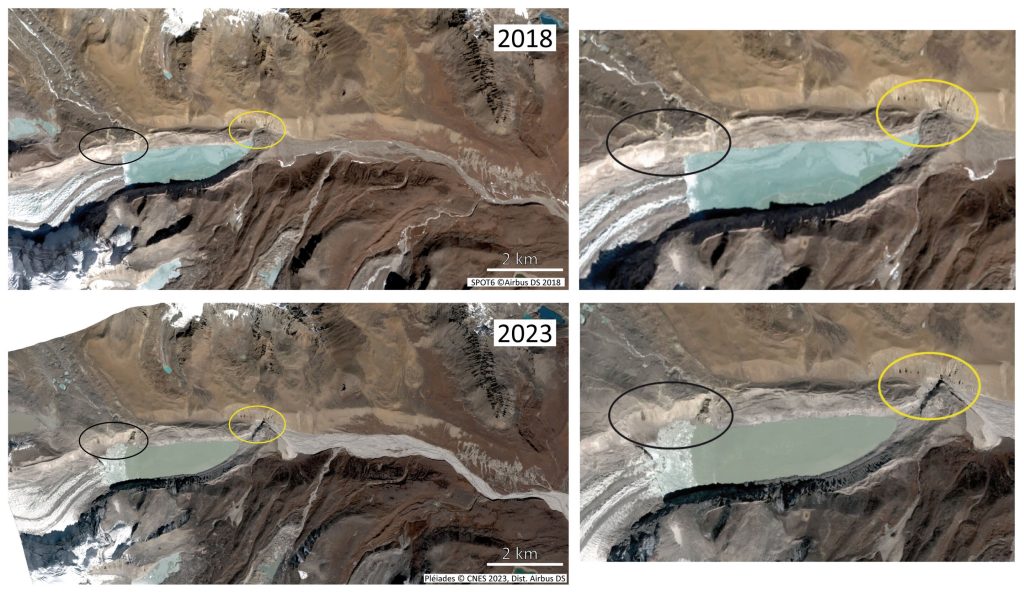
An international study has highlighted the escalating risk of successive natural hazards in the Himalayas, primarily driven by climate change. This research, published in the journal Science, investigates the catastrophic flood event that occurred in October 2023, which severely impacted areas along the Teesta River in Sikkim, India.
Key Findings from the Study
- Devastating Flood Event: On October 3, 2023, a significant collapse of frozen moraine material into South Lhonak Lake triggered a tsunami-like wave that led to a glacial lake outburst flood. This event released approximately 50 million cubic meters of water, devastating infrastructure and resulting in at least 55 fatalities and numerous missing persons.
- Cascading Hazards: The study emphasizes that primary hazards such as earthquakes and landslides can trigger secondary hazards like flooding and debris flows. These cascading effects complicate risk management strategies, which are often designed for individual hazards rather than interconnected ones.
- Vulnerability of High Mountain Regions: Researchers warn that the thawing of permafrost and instability of glacial structures pose significant risks to mountain communities. The increasing frequency of such disasters is attributed to rising global temperatures, which exacerbate glacial melt and create unstable conditions.
- Need for Improved Risk Management: The authors advocate for enhanced risk modeling and assessment frameworks, better monitoring of glacial lakes, and stronger regulations on hydropower development in high-risk areas. They stress the importance of integrating early warning systems to prepare local communities for future challenges posed by climate change.
Implications for Future Research and Policy
The findings underscore the urgent need for comprehensive disaster risk reduction strategies that consider the complex interactions between various natural hazards in the Himalayan region. As climate change continues to reshape environmental dynamics, proactive measures will be crucial to mitigate risks and protect vulnerable populations living in these high-risk areas.