
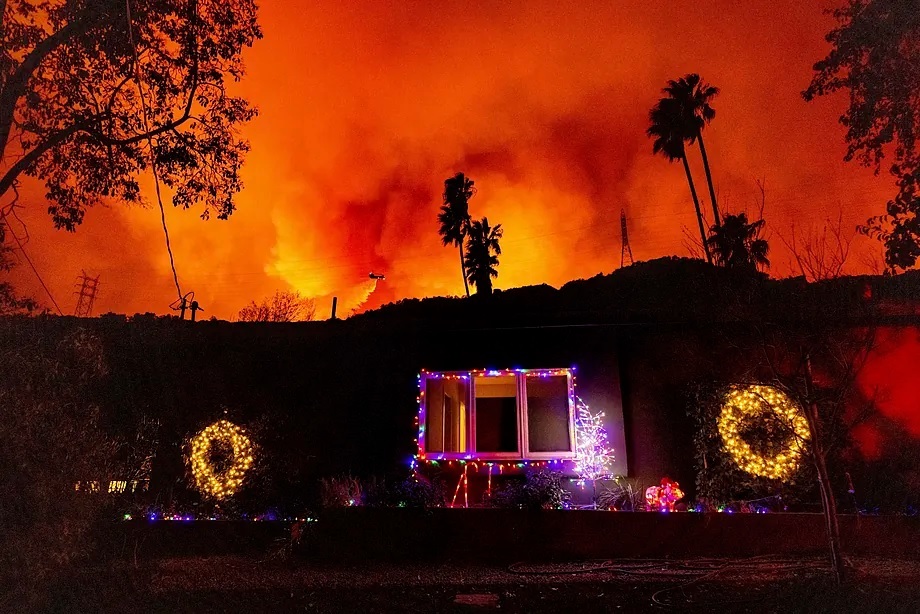
Recent studies have confirmed that climate change significantly exacerbated the conditions leading to the devastating wildfires in Los Angeles.
According to research conducted by World Weather Attribution, the hot and dry weather that fueled these fires was made approximately 35% more likely due to global warming caused by human activities, particularly the burning of fossil fuels.
Key Findings from the Study
- Increased Likelihood of Wildfires: The study indicates that extreme fire-prone conditions are projected to occur once every 17 years, a notable increase compared to scenarios without climate change1. The analysis revealed that drought conditions in the LA region are now about 2.4 times more likely than they were before significant fossil fuel use began.
- Impact of Santa Ana Winds: The researchers highlighted how climate change has extended drought conditions into winter months, increasing the chances of fires igniting during powerful Santa Ana winds. These winds can rapidly escalate minor sparks into catastrophic blazes.
- Historical Context: The findings are situated within a broader context of changing weather patterns. The study noted that the wildfire season has lengthened by approximately 23 days since global temperatures began rising around 1850, coinciding with a decrease in rainfall during critical months.
- Future Projections: Looking ahead, the study warns that if global warming continues, similar fire-weather events could become even more frequent and severe. Under scenarios predicting a rise in temperatures by up to 2.6°C (4.7°F) by 2100, the likelihood of such devastating wildfires could increase further by another 35%.
The research underscores a clear link between climate change and the increased severity and frequency of wildfires in Los Angeles. As climate conditions continue to evolve, experts warn that without significant reductions in greenhouse gas emissions, California will face an increasingly perilous fire risk in the coming years.