
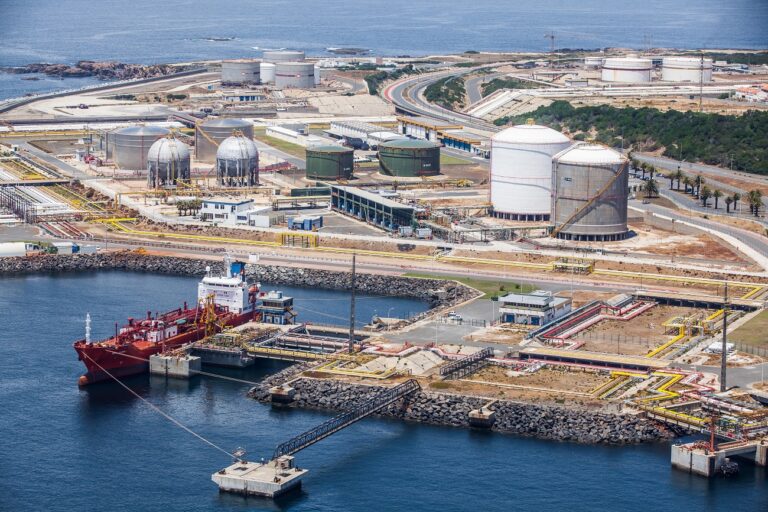
Rising sea levels driven by climate change pose a significant threat to major oil ports globally, including those in Saudi Arabia and the United States.
A recent study highlights that many of the world’s largest oil ports are projected to face severe damage from just one meter of sea level rise. This phenomenon is particularly ironic given that the burning of fossil fuels, which these ports support, is a primary cause of global warming and subsequent sea level rise.
The latest science published by the International Cryosphere Climate Initiative (ICCI) shows 1 metre of sea level rise is now inevitable within a century or so and could come as early as 2070 if ice sheets collapse and emissions are not curbed. An even more catastrophic rise of 3 metres is probably inevitable in the next millennium or two and could arrive as soon as the early 2100s.
Ports are critical infrastructure for global trade and are increasingly at risk due to rising sea levels, which are expected to continue to rise at an accelerated rate due to climate change. The impacts include permanent inundation and increased flooding risks from extreme weather events.
Current projections indicate that global mean sea levels could rise by 30 to 93 cm by 2100 if global temperatures increase by 2°C above per-industrial levels. This scenario could lead to extreme sea level events becoming more frequent, significantly affecting port operations.
The need for adaptation measures for ports is urgent, with estimated costs for adaptation and new construction ranging between $223 billion and $768 billion by 2050. These costs reflect the necessity of maintaining operability in the face of rising sea levels and increasing trade demands.
Thirteen of the ports with the highest supertanker traffic will be seriously damaged by just 1 metre of sea level rise, the analysis found. The researchers said two low-lying ports in Saudi Arabia – Ras Tanura and Yanbu – were particularly vulnerable. Both are operated by Aramco, the Saudi state oil firm, and 98% of the country’s oil exports leave via these ports.
The oil ports of Houston and Galveston in the US, the world’s biggest oil producer, are also on the list, as are ports in the United Arab Emirates, China, Singapore and the Netherlands.
The study underscores the urgent need for transitioning to renewable energy sources to mitigate climate change impacts, which would not only help in reducing emissions but also protect vital infrastructure like oil ports from future climate-related threats.