
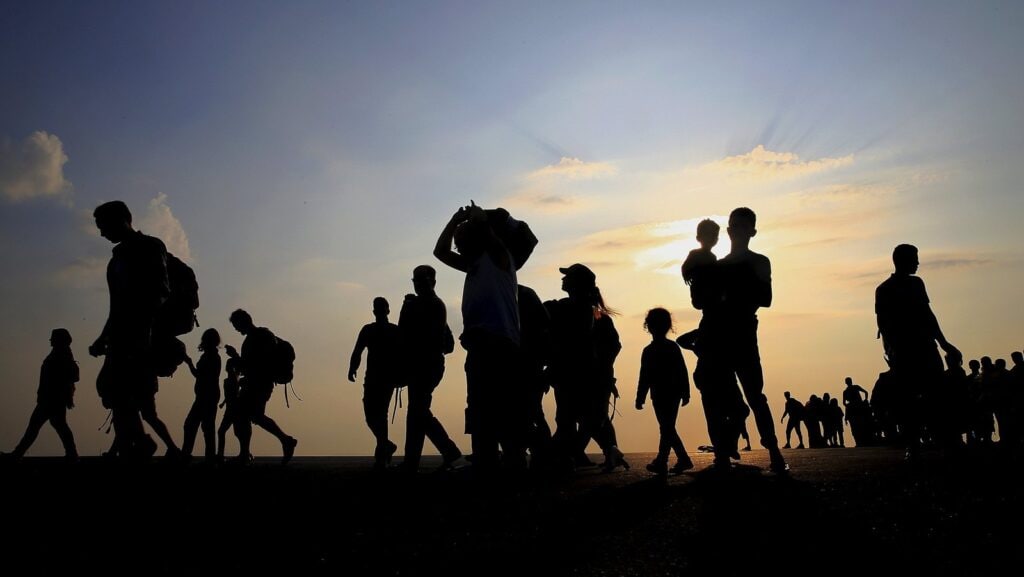
The world is facing an escalating crisis of climate migration, with millions of people being displaced annually due to extreme weather events and environmental degradation. Recent estimates suggest that up to 1.2 billion people could be displaced by 2050, although this figure is subject to debate based on differing methodologies.
Internally, countries are seeing significant movements within their borders. The World Bank predicts that about 216 million people may migrate internally by 2050 due to slow-onset climate factors like droughts and sea-level rise. Sub-Saharan Africa is particularly vulnerable, with an estimated 86 million people expected to move within the region over the same period.
Extreme weather events such as floods, storms, wildfires, and droughts have become more frequent and intense in recent years. In 2022 alone, a record number of displacements occurred globally due to these disasters. Environmental degradation also plays a crucial role in undermining rural livelihoods and prompting urban migration.
Governments are beginning to acknowledge the link between climate change and migration more formally. For instance, the U.S. government officially recognized this connection in a report released in November 2021.
Despite growing awareness of these challenges, there remains a need for comprehensive strategies to manage these migrations proactively while supporting resilient economic pathways for affected communities.
Reducing greenhouse gas emissions globally remains critical for mitigating some impacts driving displacement. Additionally, fostering sustainable jobs can help communities adapt locally without migrating away from affected areas.
International cooperation will be essential for managing migrations humanely moving forward into an increasingly challenging environment globally.
Climate migration is increasingly affecting various regions worldwide, with some countries experiencing more severe impacts than others. Here are some of the countries most affected by climate migration:
- Sub-Saharan Africa (Ethiopia, South Sudan):
- Ethiopia faces significant droughts affecting millions, while South Sudan struggles with severe flooding and ongoing conflict.
- The region is projected to have 86 million internal climate migrants by 2050 due to droughts and other climate-related factors.
- Bangladesh:
- Bangladesh experiences frequent adverse weather events and rising sea levels, threatening its habitability.
- The country’s low-lying areas make it highly vulnerable to floods and saltwater intrusion into freshwater sources.
- Philippines:
- The Philippines has been ranked high in terms of internal displacement due to typhoons and other extreme weather events over recent years.
- Somalia:
- Somalia is heavily impacted by droughts and political instability, leading to famine risks for millions of people.
- Afghanistan:
- Afghanistan faces both droughts in some areas and floods in others, exacerbated by conflict that limits adaptation efforts.
- Democratic Republic of Congo (DRC):
- The DRC suffers from increased flooding, disease outbreaks like malaria and Ebola, alongside armed conflicts that hinder resilience efforts.
- Central African Republic (CAR):
- CAR struggles with poverty, conflict legacy issues, unpredictable rains causing forest fires or heavy rainfall events impacting agriculture negatively.
- Nigeria:
- Nigeria experienced significant flooding in 2022 affecting millions; political instability compounds these environmental challenges further increasing vulnerability to famine for large populations within the country.
These countries face a combination of environmental degradation from climate change alongside socio-economic challenges that exacerbate their vulnerability to displacement driven by these factors.