
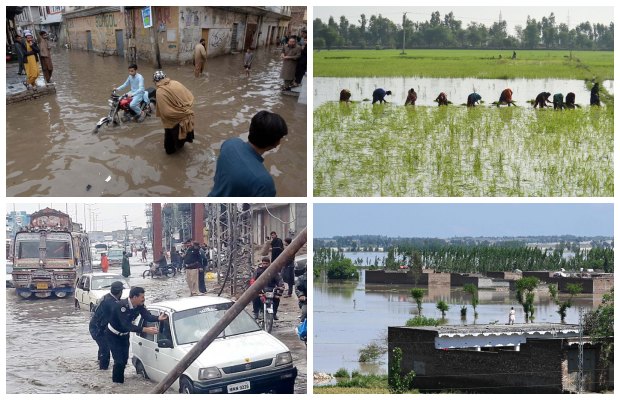
The early onset of the 2024 Monsoon Season, accompanied by above-normal rainfall and precipitation, is threatening the agriculture sector with crop inundation and increasing the risk of urban flooding in the country’s megacities.
“Monsoon usually begins at the start of July every year; however, it started on June 27–28 in Pakistan this year. The monsoon begins in Nicobar and the Andaman Islands, advances towards India, and finally covers Pakistan. Monsoon as a whole began 2–3 days earlier than initially projected in the Nicobar and Andaman Islands,” a senior official of the National Disaster Management Authority (NDMA) told the Associated Press of Pakistan (APP), as he elaborated on the prevailing phenomenon of monsoon season in the region with its increasing intensity every year.
He added that Pakistan, as a whole, is among the countries most impacted by climate change and the fifth most vulnerable country susceptible to the devastating impacts of climate change.
“Northern areas, including KP and GB, as well as Balochistan, are more at risk of climate-change-induced hazards because of their geography,” NDMA senior official added.
He also underlined that excessive rainfall can inundate fields, leading to crop losses, especially for water-sensitive crops like wheat and cotton. However, heavy rains can wash away topsoil, reducing soil fertility and negatively affecting future crop yields, he said.
The NDMA official added, “Erratic rain patterns can disrupt the agricultural calendar, delaying planting and harvesting times, which can reduce crop quality and yield. Increased humidity and standing water create favourable conditions for pests and diseases, further harming crops.”
While, persistent heavy rains can cause waterlogging, damaging the root systems of crops and leading to poor plant health and lower yields. Flooded roads and infrastructure can delay the transportation of agricultural goods, leading to post-harvest losses, he added.
According to him, rising global temperatures due to climate change have intensified the water cycle, leading to more extreme and unpredictable rainfall.
The rapid urban development disrupts natural water drainage systems, leading to increased runoff and flooding, whereas the loss of forest cover reduces the land’s ability to absorb rainfall, increasing surface runoff and soil erosion, he added.