
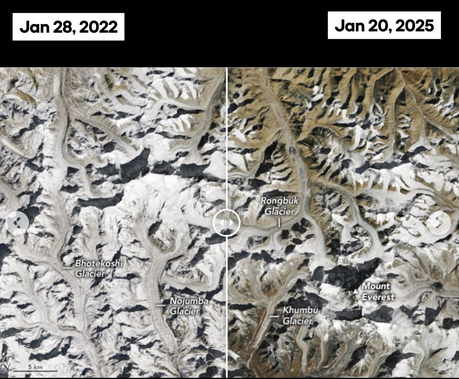
The snow line on Mount Everest’s glaciers is indeed creeping higher, reflecting a significant shift in the region’s winter conditions. This trend is primarily attributed to warmer and drier weather patterns, combined with the process of sublimation—where snow directly evaporates into water vapor without melting.
New Satellite Data Reveals Key Factors Contributing to the Shift
Sublimation: This process plays a significant role in reducing snow cover by causing ice to transition directly into vapor, leading to substantial glacier mass loss.
Warmer and Drier Conditions: Recent winters have seen increased temperatures and reduced humidity, which are crucial factors driving the rise in snow lines.
Implications of Rising Snow Lines
- Water Security Threats: The reduction in snow accumulation can disrupt long-term glacial ice formation, potentially impacting freshwater supplies for millions downstream.
- Increased Fire Risks: Reduced snow cover contributes to drier conditions that can exacerbate forest fires during Nepal’s fire season.
The rising snow line is not an isolated event but part of a broader pattern observed over recent years (2021, 2023, 2024, and 2025), indicating a persistent change rather than temporary fluctuations.
Unlike North American or European glaciers that rely on winter precipitation for growth, Himalayan glaciers primarily accumulate mass during summer monsoons. However, warmer winters reduce their ability to retain seasonal snow necessary for forming glacial ice over time.
Overall, these changes highlight significant climate-related shifts affecting Mount Everest and its surroundings.