
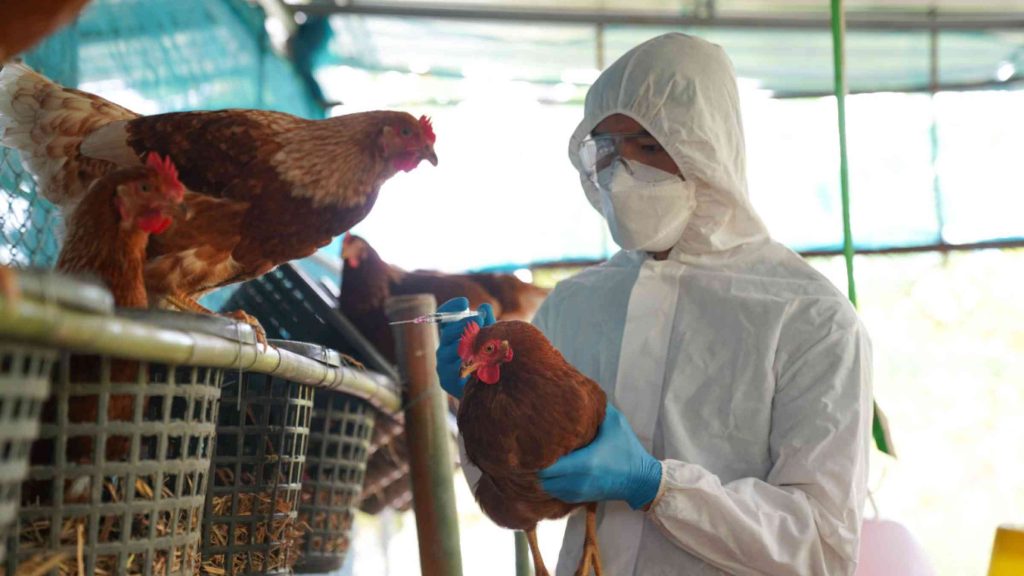
After the first time a cluster of human cases of bird flu has been reported in the US, scientists link that extreme heat could be a significant factor in the spread of bird flu among humans.
As reported, a heatwave in Colorado likely caused personal protective equipment not to work correctly for workers culling poultry infected with H5N1, a highly pathogenic bird flu.
Four people have tested positive for H5N1 and a fifth is also expected to have their case confirmed as bird flu, officials said earlier this week.
Earlier this month, Colorado confirmed a case of bird flu in a dairy worker.
Experts say that climate change, which has been associated with intense heat across the country, can exacerbate outbreaks of deadly diseases like these.
Additionally, climate change has been connected to the emergence and broader dissemination of pathogens, including new migratory patterns for H5N1-infected wild birds.
“When you change a global system like climate so profoundly, small shifts can have seismic impacts, sometimes in unexpected ways,” said Alexandra Phelan, an associate professor at Johns Hopkins Bloomberg School of Public Health.
As reported, in the US state of Colorado, the workers were culling a flock of egg-laying chickens that had tested positive for H5N1.
They went bird by bird – catching them, putting them in a cart and killing a few dozen birds at a time with carbon dioxide gas.
“It’s a very, very manual – difficult, laborious process,” Julie Gauthier, from the Animal and Plant Health Inspection Service at the US Department of Agriculture (USDA), said at a press briefing on Tuesday.
It can be dangerous to work in such close and prolonged quarters with animals infected with bird flu, which has a mortality rate of about 50% among people.
It was 104F (40C) outside, but in the chicken houses, it was even hotter.
Nirav Shah, principal deputy director of the US Centers for Disease Control and Prevention (CDC), told reporters, “Between the sweat and the enormous industrial fans to stave off even higher temperatures, workers couldn’t keep their goggles and masks sealed on their faces.”
The fans also spread feathers and debris, which can carry the virus aloft, Shah added.
Of the 160 people working on the farm, 60 went on to develop symptoms, and five tested positive or are presumed to be positive. The remaining 55 workers tested negative for H5N1 at the Colorado State Health Lab, and some of them were diagnosed with other respiratory illnesses. Only symptomatic workers were tested.
“As the epidemiological investigation proceeds, it is important to note that additional cases may be detected,” Shah added.