
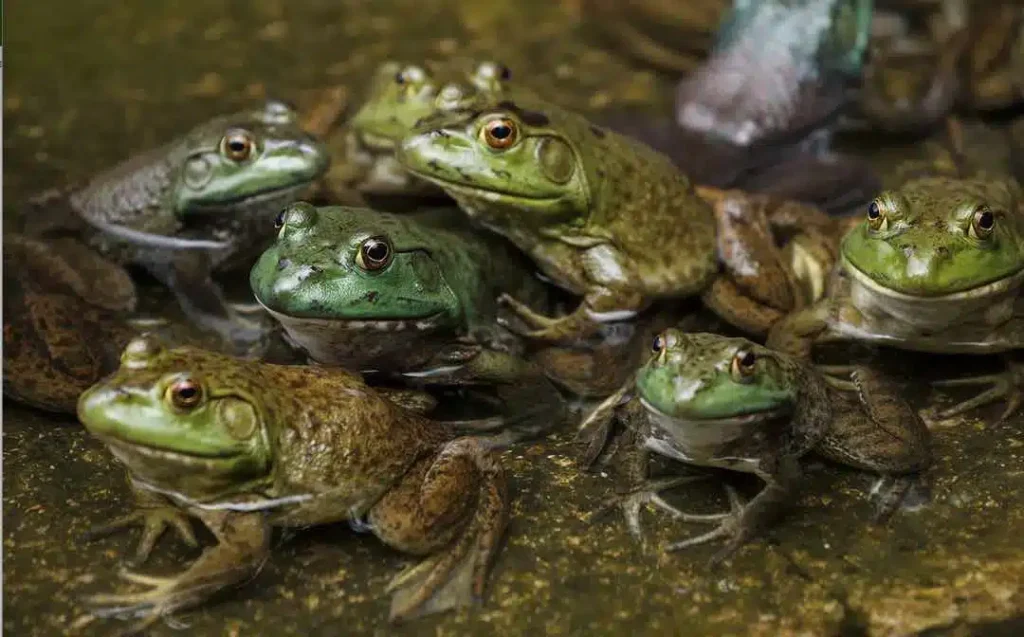
An international survey has revealed alarming insights into the vulnerability of frogs and toads in the Amazon and Atlantic Rainforest as global warming and drought become increasingly severe. Conducted by a team of researchers, the study highlights that these amphibians are at significant risk due to anticipated increases in drought frequency and intensity linked to rising global temperatures.
The research indicates that between 6.6% and 36% of anuran habitats worldwide could face arid conditions by the end of the century, depending on future greenhouse gas emissions. A moderate rise of 2°C in global temperatures could lead to approximately 15.4% of these habitats experiencing more frequent drought events, while a severe increase of 4°C could escalate this figure to 36%.
Frogs and toads are particularly sensitive to water loss because of their permeable skin, making them vulnerable in drier conditions. The combination of higher temperatures and reduced water availability is expected to significantly decrease their activity levels—by as much as 26%—compared to reductions caused by warming or drought alone. This decline can severely impact their foraging and reproductive behaviors, threatening their survival.
The Amazon and Atlantic Rainforest are recognized as regions with the highest diversity of amphibian species, making them critical for conservation efforts. The study warns that these biomes will likely endure the most severe consequences from climate change, including prolonged droughts lasting an additional four months per year under extreme warming scenarios.
Researchers stress the urgent need for conservation strategies aimed at mitigating the effects of climate change on amphibians. As frogs and toads face a stark choice between migration or adaptation, understanding which species can adjust physiologically or behaviorally is crucial for predicting future biodiversity outcomes in these vital ecosystems. This study serves as a poignant reminder of the interconnectedness of climate change impacts on biodiversity, particularly in ecologically rich areas like the Amazon, where amphibians play essential roles in maintaining ecosystem health.