
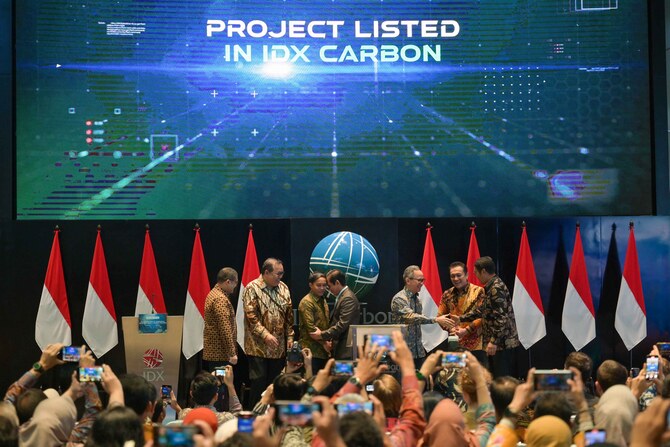
Indonesia has officially opened its domestic carbon market to global investors, marking a significant shift in its approach to carbon trading. This decision aims to attract foreign investment and enhance the country’s role in the international carbon market.
The Indonesian Stock Exchange (IDX) has initiated the IDXCarbon platform, which allows foreign entities to participate in carbon trading. This platform began operations following the government’s decision to permit international buyers to purchase carbon credits, thereby expanding market access beyond domestic players.
Since its launch in September 2023, IDXCarbon has facilitated the sale of approximately 41,822 tons of CO2 equivalent credits at prices ranging from 96,000 to 114,000 rupiah per ton, depending on the type of energy project.
By January 2025, over 1.7 million domestic carbon credits have been listed for purchase.
President Prabowo Subianto has set ambitious targets for Indonesia, aiming for net-zero emissions by 2060 and requiring substantial investments in renewable energy and infrastructure—estimated at up to $3.8 trillion.
The government is optimistic about Indonesia’s potential as a major player in the global carbon market due to its vast natural resources and existing carbon credit projects.
The Indonesian carbon market has faced low demand since its inception, with a significant portion of carbon credits remaining unsold. As of late 2023, about 71.95% of available credits were not traded.
Analysts have expressed concerns that without robust regulations and quality assurance for credits, interest from global buyers may be limited.
While the government has taken steps to open the market, many regulations are still under development. Ensuring compliance with both national laws and international standards will be crucial for attracting foreign investment and ensuring the credibility of Indonesia’s carbon credits.
Environmental analysts have raised alarms about whether the trading will lead to genuine improvements in emissions reductions or merely serve as a financial mechanism without tangible environmental benefits.
Indonesia’s move to open its domestic carbon market to global investors represents a strategic effort to leverage its natural resources for climate action while aiming for significant economic benefits. However, addressing regulatory gaps and ensuring the integrity of carbon credits will be essential for the long-term success of this initiative.