
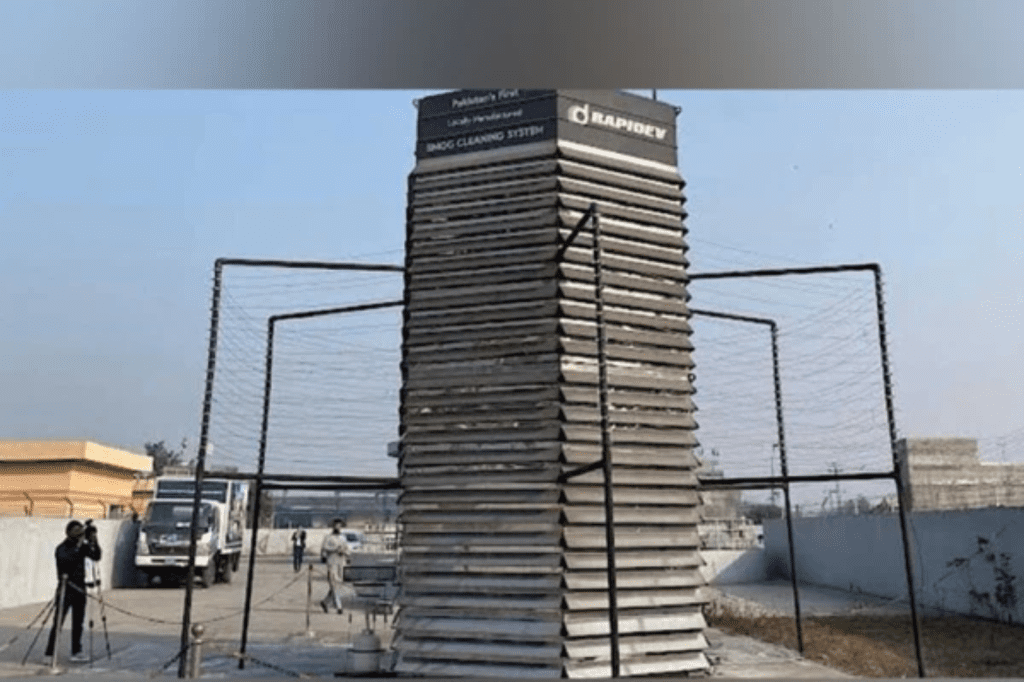
Recent discussions surrounding Lahore’s first smog control tower have raised concerns regarding its effectiveness. Experts argue that the installation of such towers is not a viable long-term solution for the city’s severe air pollution issues.
Lahore’s first smog tower was installed in the Mehmood Booti area to combat air pollution, with claims that it could purify up to 50,000 cubic meters of air per hour. The Punjab Environmental Protection Department initiated a trial run to assess its performance against pollutants like PM2.5.
Experts have criticized the smog tower as ineffective, suggesting that Lahore would need approximately 20,000 smog towers to make a significant impact on air quality. This requirement far exceeds the financial feasibility of addressing pollution at its sources, such as industrial emissions and vehicle exhaust.
The operational costs of running these towers are expected to surpass the expenses associated with more direct methods of pollution control, such as improving emission standards for factories and vehicles. This raises questions about the practicality of investing in such infrastructure.
Similar projects in other cities, like Delhi, have shown limited success. Reports indicate that smog towers can only improve air quality in localized areas, often failing to provide substantial relief from widespread pollution.
Environmentalists advocate for a more integrated approach to tackle air pollution, emphasizing that reliance on smog towers alone is akin to “papering over major cracks.” They argue for stronger regulations and actions targeting the root causes of pollution rather than temporary fixes.
The focus should shift towards comprehensive strategies that target pollution sources directly.