
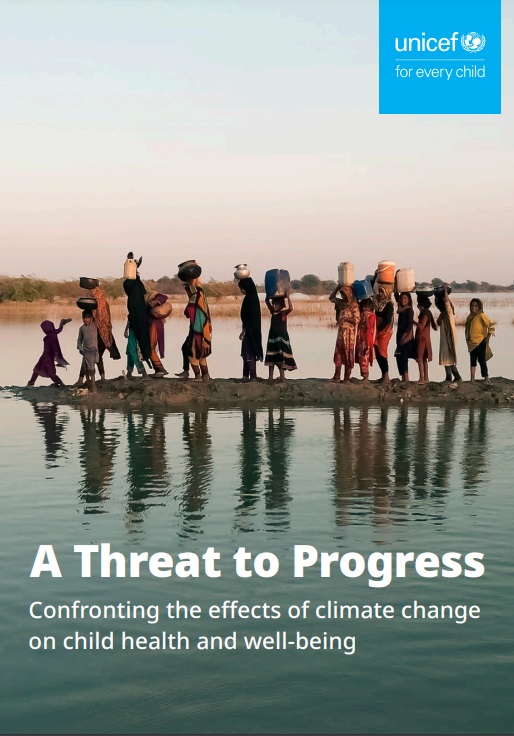
A latest report by UNICEF, “A Threat to Progress: Confronting the effects of climate change on child health and well-being,” highlights the devastating impact of climate change on children’s health and well-being. The report emphasizes that climate change is not only an environmental issue but also a pressing concern for child development and survival.
Key findings from the report, published in July 2024, include that climate change is affecting almost every aspect of child health and well-being, from pregnancy to adolescence. Children are disproportionately affected by climate change due to their unique vulnerability to environmental hazards. The health impacts of climate change compound as children face climate-related hazards that often overlap. Adverse birth outcomes, including pre-term birth and low birth weight, are increasing across most climate-related hazards. Neonates and infants have a higher risk of death due to air pollution and extreme heat. Killer infectious diseases for children, like malaria, are expected to intensify with climate change. Malnutrition, underlying half of all under-five deaths globally, is set to increase due to extreme weather events.
The report highlights the devastating impact of climate change in countries such as Pakistan, where extreme weather events like the 2022 floods affected over 33 million people, resulting in over 350 child deaths and lasting adverse health outcomes.
The report makes three key recommendations to address the impact of climate change on child health and well-being. Firstly, reduce emissions to meet 1.5°C degree threshold, ensuring the best interest of the child. Secondly, protect children from the impact of climate change through adaptation actions. Thirdly, prioritize child health and well-being in climate policy, investment, and action.
According to exposure data, around 400 million children were highly exposed to tropical cyclones as of 2021. Additionally, approximately 330 million children were living in areas highly exposed to riverine flooding, and 240 million were living in coastal areas prone to flooding.
The report highlights that children are vulnerable to storms and flooding due to their developing physiology and physically limited ability to withstand high wind speeds and large water masses. Furthermore, flooding during pregnancy has implications for maternal and child health, including increased risk of adverse birth outcomes and pregnancy complications.
In Pakistan, the report notes that the 2022 floods were exacerbated by climate change, resulting in over 33 million people affected, including millions of children. The floods destroyed households, schools, and health facilities, leading to over 350 child deaths and lasting adverse health outcomes. The report also highlights that children in Pakistan are vulnerable to storms and flooding due to their developing physiology and physically limited ability to withstand high wind speeds and large water masses. Furthermore, flooding during pregnancy has implications for maternal and child health, including increased risk of adverse birth outcomes and pregnancy complications.