
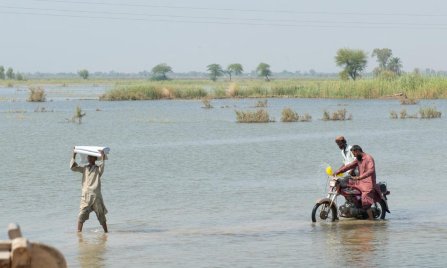
Climate change poses a significant existential threat to Pakistan, necessitating immediate and coordinated action from both the government and the corporate sector. This urgency is underscored by Pakistan’s ranking among the most vulnerable countries to climate change, with frequent extreme weather events such as floods, droughts, heatwaves, and wildfires.
The 2-day Breathe Pakistan International Climate Change Conference held in Islamabad from Feb 6 to 7, highlighted these challenges and emphasized the need for a comprehensive approach to mitigate environmental impacts.
Key Challenges Facing Pakistan Highlighted
- Extreme Weather Events: Increased frequency of floods, droughts, glacial lake outbursts, heatwaves, and wildfires due to climate change.
- Economic Impacts: Climate-related disasters have resulted in significant economic losses; between 1992 and 2021 alone, these losses totaled $29.3 billion.
- Vulnerability: Pakistan is ranked among the top five most vulnerable nations globally due to its geographical location and socio-economic conditions.
Experts at conferences like Breathe Pakistan stress the importance of public-private partnerships in addressing climate challenges. These collaborations can help implement sustainable practices across industries through shared responsibility models that include government incentives and private sector investment.
Corporate entities are urged to transition towards sustainable business models incorporating renewable energy sources (e.g., solar or wind power), circular economy principles (reducing waste through recycling), and carbon offset initiatives (planting trees or investing in carbon-neutral projects).
There is a strong emphasis on integrating climate resilience into national policy frameworks. This involves developing policies that support low-emission technologies (such as electric vehicles) while promoting compliance with emission standards across industries.
Technology plays a crucial role in enhancing early warning systems for natural disasters like floods or cyclones. It also aids in disaster mitigation efforts by providing real-time data analysis tools that help predict potential threats more accurately.