
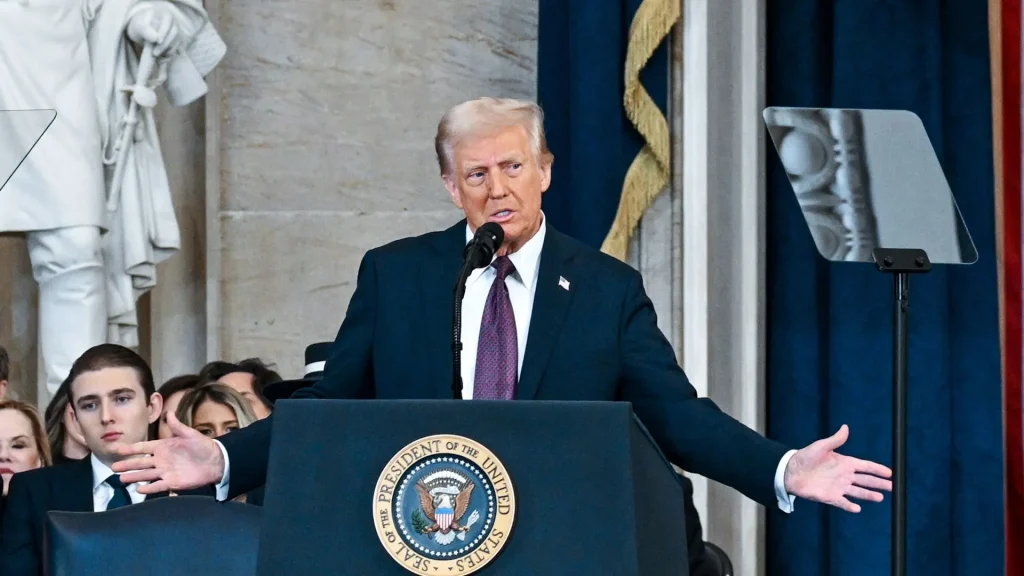
On January 21, 2025, Donald Trump, on his first day of presidency, declared a national “energy emergency” aimed at significantly boosting fossil fuel production in the United States. This unprecedented declaration allows for expedited permits for fossil fuel infrastructure, with Trump asserting that it is essential to address high energy prices and prepare for rising demand from emerging technologies.
The U.S. has never declared a national energy emergency before; previous declarations were localized during the 1970s due to fuel shortages. Currently, the U.S. is producing more fossil fuels than any other nation, with production levels near record highs despite previous regulations.
Trump aims to cut energy prices for consumers by 50%, a target analysts deem improbable. He believes that increasing oil and gas production will achieve this, although such plans may have detrimental effects on the environment and climate.
The declaration will facilitate the fast-tracking of fossil fuel projects and aims to reverse environmental protections in states like Alaska. This includes lifting a pause on applications for exporting natural gas, which could lead to price increases for American consumers if international demand rises.
While increased production could lower prices temporarily, experts warn that if prices fall below $45-$50 per barrel, many oil companies would find it unprofitable to continue drilling. This could lead to a cyclical pattern of boom and bust in the fossil fuel market.
Energy prices are influenced by various factors beyond just fossil fuel costs, including distribution and transmission expenses, which account for about 40% of final consumer prices. Thus, merely increasing fuel supply may not alleviate high energy costs effectively.
Trump’s declaration is positioned as a strategy to enhance domestic energy production and reduce consumer prices, but it raises significant concerns regarding environmental impacts and economic viability in the long term..